Showing posts with label Sheng. Show all posts

Friday, 23 March 2012

2010 Douji - Ban Zhang

This is another high end Douji product and it was the last sample I tried from the 2010 production. Shengs from the the Ban Zhang area are highly demanded and this fact is reflected in its price which is growing from season to season and god knows when will it stop. However the price for the sample was reasonable at 5.70 USD for nearly 30g. There was some travelling during this week so not to much time left for tea drinking, but it is finally weekend so I can sit back and enjoy something good. 

 5.4g in a 90 ml gaiwan
10s rinse, 10s, 3s, 3s, 3s, 10s, 15s, 30s, 30s, 50s, 1:30, 3min 


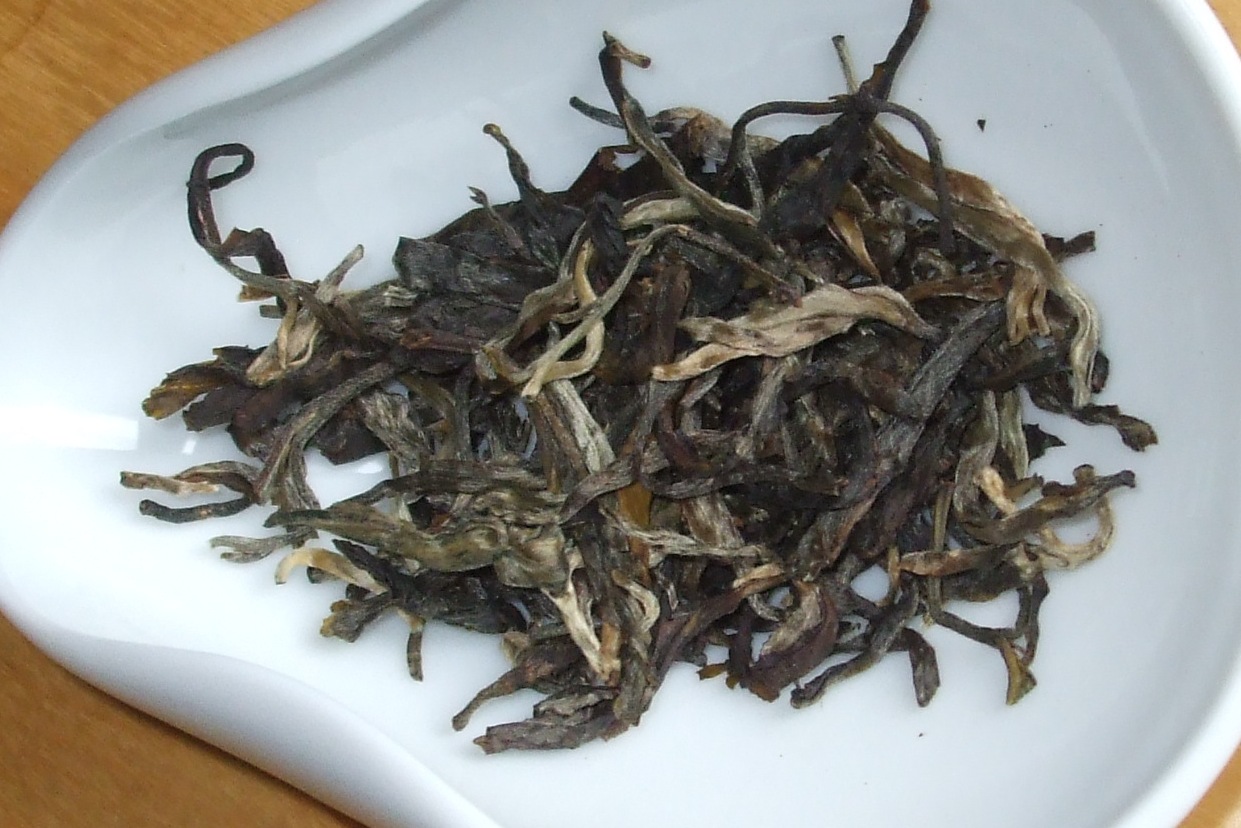
The dry leaves are very pretty as you can see, big and healthy. I used the loose leaves from the sample so I can not tell to much about the compression of the cake but I guess its not too tight. The smell of the wet leaves is intense and penetrating being on the sweet-low side without any significant floral aroma (maybe a bit of dry fruits).

The first infusion at 10s gives an unusually strong soup. The kuwei is intense giving the hint that there is energy in the leaves. I kept the next infusion as short as possible and the result was really delicious. There is plenty of sweetness which nicely balance the bitter character. The aroma of the liquor has medicinal notes and the taste is broad and full bodied, on the low side similarly as the aroma of the wet leaves. (It is on the low side but not at the dark-tobacco-menghai-like-low end, just a couple of levels above). The mouth feel is dense and throat tickling. The huigan is potent keeping my breaks between the infusion long.


The colour of the liquor seems to be right for a two year old sheng. The character of the tea doesn't really change during the session, the steeps are equally tasty without loosing thickness or becoming rough. 5 and a half gram of leaves gave 11 strong infusions, what is impressive and I was enjoying this tea practically during the whole Saturday.
The wet leaves are equally chunky and attractive  as the dry ones.

For me, a good tea is mostly about the balances between the sweet and bitter mouthfeel, low and high notes, uplifting and calming qi and this tea has it right.

I tried just a couple of samples coming from the famous villages  (Ban Zhang, Gua Feng Zhai, Xi Kong...) so I cant really compare but as you probably found out I enjoyed this tea and is among the best ones I tried so far.

And the price? 80 USD for a 357g bing. Do I want it? YES! Do I buy it? unfortunately no! Taking in account the origin of the leaves the price seems to be right, however, it is simply too much for me. Unlike Hobbes who is running out of space I am still in the shelf-filling period, so I prefer to buy cheaper but decent cakes in higher quantity. Moreover, one could find a good semi-aged sheng in this price category. 

Anyways, If I do some math, the price for a session (leaves coming from the sample) is about 1euro, and it is difficult to find anything for this price what gives that much joy like this tea.  

Friday, 16 March 2012

90's Raw puerh brick


Huh, it has been quite some time since this tea arrived, maybe a year or so. There was this thing called OTTI9 which was about aged shengs from the 90s and I was lucky enough to participate. In this period I had tried only raw puerh form the last 10 years, so I was quite curious what can a nearly 20year old tea offer. The samples were provided by Nada (EoT,1997 Bulang) and Brandon who shared a wet stored example of the 8582 Menghai receipt and a dry stored sheng brick. The event was organized by the moderator of teachat, Chip.
The package arrived and after the first sniffs I was sure that this will be something special. And it was.

As it was mentioned I had no experience with aged sheng at that time so I was handling these samples quite preciously. As Jakub mentioned in one of his recent posts it is better to get to the good stuffs slowly, step by step. Since I share the same attitude I kept this sample until I will be over at least a couple of aged teas.  

It is Sunday evening, and I am searching for something good in the sample box. And look, the dry stored shengpu from the 90s.
 The whole sample, 5 grams, goes into my zisha pot which has around 100ml. This is a low tea/water ratio for an aged sheng, but since this pot does nice thing with them, I go for it.
The dry leaves from the hot pot give a sweet aged smell, with some tobacco and smoke; there is also some spice at the end. After the rinse the tea wakes up from its long sleep releasing a strong sweet fragrance, the smoky-like character remains but doesn’t disturb, on the contrary. As it cools the fragrance become creamier.
cause the last drops are the best
The first couple of infusions were light but the taste got stronger steep after steep. At the 4th infusion the liquor became orange-red, thick and sweet with mainly aged character, though there were hints of fruits from the youth. I could pick up (ripe) plum notes which mixed very nicely with the tobacco base. This tea reminded me at some points the 2002 Hai lang hao Wild arbour sheng, which is of course younger, but nevertheless. There is some bitterness when the tea reaches its peak and a bit of astringency at the later infusions.  

The overall impression is specific. I used to read that good shengs develop their own character during the ageing and I think, this could be a nice example. 

And the qi? Calming and suits nicely for a Sunday evening. The combination of the meditative tea brewing procedure and cha qi of aged shengs often helps me to look at the things from a different perspective, from more “above”.

Despite the low tea/water ratio and light initial infusions the durability of this tea was decent. I had 6 steeps at the evening, another 3 at the morning and a couple of overnight infusions.

I am grateful to Brandon as well as to the others who put this OTTI together. Sacrifice such valuable shengs just to introduce them to us, newcomers, has to mean a real passion for teas. Thanks again.   

tea 'n' skype

Sunday, 11 March 2012

2010 Douji - Jin Dou

This was among the first sample which I tried from the "Douji package" I took it out randomly and the only criteria was that it had to be a 2010 production.

It is categorised as top blend and the description tells that old arbour tree leaves were used from Ban Zhang, Yiwu, and Jing Mai. All of these areas usually provide good shengs  (though the place of origin is not necessarily a guarantee) so I am curious how they perform together.

Like usually, 5-6 g of leaves goes to the preheated gaiwan. After the first rinse the room is filled with sweet and strong shengpu smell.


"

The first infusion already delivers a delicious soup. The sweetness is complex and rich and after the swallowing the aroma is lingering in the back of the mouth up to the nose. The prominent cooling effect may be attributed to the old tree origin and I usually take it as a sign of good quality. The subsequent infusions were more intense with nice kuwei which turns to a sweet-orange long lasting aftertaste. 

cooling the mouth warming the soul

The liquor is thick, one could chew it. There is just enough nice bitterness turning to huigan already in the first infusion and builds up with each steep. The durability is good and the tea remains rich in the later infusions without becoming thin or rough. I did even a couple of very long steeps after the session resulting in sweet soups.


The qi starts as calming like with the most of the shengpu and stays calm during the whole session and long after it: doesn't become too energetic or overwhelming.

My impression is very good, though it may seem a bit expensive with 57USD at china cha dao, but there are not too much cakes with similar quality in this price range. Fortunately, this tea is available also as a 75g brick for 10 USD and most probably I will take 2 of them, one for ageing and the other will be tested once upon the time in order to follow how does it change.  

a family picture

Friday, 9 March 2012

Finally

I made an order of Douji samples approximately a month ago. I was running out of shengs here so I was waiting impatiently for this packages. It took some time probably due to the Chinese new year but it`s finally here.
Based what I have read the Douji products are quite decent and popular among the bloggers (Hobbes reviews are mostly very positive). These 13 samples from 2010 and 2011 should gave me an idea about the recent production of this brand. 
I already tried a couple of them and it looks quite promising. 

Sunday, 4 March 2012

2011 YS - Cha Qi

After the positive impression of the 2011 Shang chun I decided to try the other blends from the YS production. Cha Qi is a blend of maocha coming from the Bulang mountains. Shengs from this region are known for strong bitterness, but as Scott mentions in the description, in this case, the resulting blend is less bitter then the starting materials.      
The session was done at the morning before going to work and there were no pictures taken, so I dare to use some from the YS site


To make this review short, this tea is delicious being thick, with strong mouth-coating effect and good durability. The bitterness was well balanced giving enough space for the sweetness. The qi is powerful and its energy lasted until the lunch. 


Probably the bitter character of each maocha of this blend had opposite charge and once they met the annihilation exploded into a unique matter having the best characteristics of each starting component.

 
This is another nice example which proves that blending is a beautiful art. I have done only one session and as experimental scientist says "one result is no result" or "an experiment is valid only if it is reproducible" I will need to re-try it soon and possibly update this post. But so far 1 or 2 cakes  are already on my whislist. 

Ps: I recommend to drink young strong teas at the early morning before going to work, it gives a nice boost which may last until the afternoon. 

Thursday, 16 February 2012

2011 EoT - Bulang

I realised this week that I am out of young shengs. All my cakes are back home in Slovakia and plus some unopened packages are waiting in my room, while here in Milano the samples are gone. I have a full cake of the delicious 2011 Mansai with me but I can not drink it every day, I prefer diversity.

As I was searching for some sheng to drink I found the sample of 2011 EoT Bulang which I ordered last year. I remember the bloggers writing about this tea as strong, overpowering, violent, superpotent, and after my first session I could just agree with them. After 10 water-in-out infusions the bitterness was still covering most of the other characteristics. I left it to rest for 2 months or so and using less leaf the result was better. Almost one year has passed and the open package with the sample has been sitting in my room (also during the summer which is hot and humid here). It is time to take it out and see if it managed to settle down a bit.

4g/90ml gaiwan
10s rinse, 3s, 3s, 3s, 3s, 3s, 3s, 3s,10s, 20s, 30s, 45s, 1min, 2min
As I take out the opened bag and take a sniff, the smell of the dry leaves is intense even in the cold room. The wet leaves are on the lower side, nuttiness with tobacco. The  "3s" means water in and immediately water out steeps but even this seems to be too long :). The first 2-3 infusions are bitter as I expected, reminding me some herbal tea I used to drink for upset stomach. Even the aftertaste which suppose to be sweet is bitter. But than it starts to be more interesting, around the 3-4 infusion sweetness kicks in, the soup is thick-oily, and my throat and backs of the mouth is heavily coated, having some silky mouth feel(?).
The bitterness is still more than decent but turning to sweet aftertaste with some higher notes, it is really intense. The qi is particularly strong. After the second steep I already felt a "bang", I was just sitting sedated and watching out from my head, being sleepy. This changed after the next few infusions as the qi turned to an uplifting - energising feeling.  Six steeps was enough for me to be tea drunk so I interrupted the session for a few hours and continued at the afternoon.


Drinking this tea is a particular experience, but I am not sure if it is already enjoyable. It is not that kind of sheng which one could drink at the evening to relax, at least not now but after few years or a decade it will most probably change.

Anyways, I recommend to try or re-try this Bulang with less leaves and 2-3 rinses at the beginning. The EoT sells the full cake for 51 GBP what may seem to be a bit too much, and while it is not that suitable for immediate drinking, it is almost a safe bet for long term ageing. However it is out of stock now, what maybe isn't that bad because I would buy a cake in one of my weak moments :).

Thursday, 9 February 2012

2011 EoT - Mansai


I discovered the shop of Essence of Tea relatively late. The quality of their own production of young shengs is particularly good and the prices are also ok. Since it is an European based shop I can avoid the high shipping fees and custom, and this is not a negligible criteria for me. 

With my first order also came a free sample of the 2011 Mansai. Among the 2010 production the 2010 Mansai was my favourite so I was curios if the 2011 will have similar qualities. The sample was enough for two sessions after which I had to admit that it is maybe even better than the one from 2010.

5g/ 90ml gaiwan
10s, 3s, 3s, 10s, 20s, 30s, 45s, 1min, 2min, 3min, long


The dry leaves are pretty and offer a potent young sheng aroma from the hot gaiwan; combination of  mainly lower notes and some fruitiness. After the rinse the smell is strong and sweet inducing salivation.
The tea is loaded with sweetness and depth, the liquor is full and has a nice mouth coating effect.


There is some nice kuwei but no astringency. The huigan appears early and it is getting stronger with every infusion. A combination of fruity with broad tobacco base, highly enjoyable. Most of the young shengs become rough and astringent on the later infusion, but not this one, even the last long infusion delivers a sweet liquor still having the character of this sheng, what is a good sign for me. The qi is calming what I experience rarely with young shengs.

The leaves are nice: big and thick, it is a pleasure to look at them. 


Some of them are really magnificent.


I think there is no need to conclude that I like this sheng. The tea has young and wild character in a not offensive way. If you sample a couple of young shengs in a row, you will remember this one as impressive. Of course, I can not tell how it will age but it has the potency so I am optimistic. I bough a cake but after another few sessions (and the fact that there is no custom and the shipping fee is low) I took another one, so now I have one for drinking and one for ageing.


PS: It is only february but I am already waiting for the 2012 production of EoT shengs, it will be again an exciting period going through the new production.

Thursday, 2 February 2012

2005 Yong Pin Hao - Stone-pressed Yiwu

This tea arrived in my second package of sheng samples, and I just realised that one year has passed since that time.  Some of the samples have gone quickly, some turned to full cakes, and some are still resting in my drawer. The reason why they lasted so long is not an attempt to age them but the fact, that they didn’t impress me that much. Once upon a time I take out some of these samples and re-try it. It is an interesting experience.


The way I sense and then judge a tea is changing: what I considered to be a good value one year ago, may not be as good now. It is a process of learning, I think. It takes time to find out what suits me, which are the things I have to look for in a tea. In this process of learning I consider the honesty with myself to be one of the most important issues to learn. There were teas described as a delight by someone and I tried to convince myself how much I like it. Silly, I know, but sometimes you just don’t realise it. Often the tea hasn’t been tried yet but the opinion is already made. These kind of situations could be applied also for life in general.

Things are slowly changing to better (I guess), but as usual, there is always place for improvement and I feel to be only at the beginning of my tea journey anyways. But lets get back to this young sheng from 2005.

As I look back I recall this tea as weak. When I started with young shengpu as an unseasoned tea drinker I experienced most of them as strong, loaded with flavor and often bitter in both good and bad way. Among them this one was quiet, mild and therefore not interesting.

The last chunk in the sample bag has around 8g what is more than I usually use, so it should be enough to bring out the potency of this tea (if there is any).

8g / 90ml gaiwan, 10s rinse, 10s, 10s, 20s, 30s, 45s, 1min, 2min, 5min


Both the dry and wet leaves have low, tobacco like sweet smell. I also notice an aged character in the aroma. It is clear, no disturbing storage smell. The initial infusions are a bit thin but tasty. The lid of the gaiwan releases some fruity notes typical for Yi Wu teas, not much though. As I increase the steeping times the liquor become thicker, the taste is sweet tobacco like. The aged - nutty character, which is appearing both in the tea and aroma cup, is very unusual for a sheng of this age. 


As you can see also the colour of the liquor is darker than one would expect. 

The later infusions are mild, round but enjoyable. There is almost no bitterness, the aftertaste is nice but not to intense. I have drunk mainly shengs coming from recent years these days and the difference in the qi is noticeable; this one is rather on the calming then uplifting side. I started the session with a bit upset stomach but it got fixed after the first infusions, what is a good sign. 


It is not easy for me to find and overall conclusion. The session was nice, the taste was also good, but as I look at the parameters I had to push this tea quite a bit to get the result. I could think two explanations which would clear up the lack of energy in this tea. Maybe the leaves used for this sheng are not strong enough and don't have sufficient load of fuel, but as I look at them after the session they look big and nice; some are whole and some fragmented.


Another explanation is the one which I read on Hobbes blog. He often describes the Yong pin Hao teas as over processed. In other words, they use some extra steps and/or time during the processing to enhance the flavor: make it sweeter, rounder and also possibly add an aged character. However, the ageing process should be natural and I am not a fan of this kind of "upgrades".

The current price at YS is 40 USD what would be fine if one would give the same result with 4-5 g instead of 8g, unfortunately this is not the case.


Thursday, 19 January 2012

2011 Yunnan Sourcing - Shang Chun

I think there is no need to introduce Scott from Yunnan Sourcing. For many of us, puerh drinkers, his China based tea shop provides a wide selection of young and semi aged puerhs of all kind of origin, including well known factories as well as small companies. I suppose he tries most of the teas he sells and thus the level of his experience has to be very decent. Good examples of this are the cakes from the YS brand. Those which I tried had single mountain origin, and I liked most of them. However, blending is a different story. I newer tried to mix up a blend of young shengs, but based on those few things I have read, blending is a very sophisticated kind of art. There are no equations which would help you to select the right quality and quantity of mao cha to get the desired result. I guess, all you can do is to use the trial and error method, but also here, the intuition which originates from experience is necessary to know where to start and which way to go after each attempt.

Scott often provides free samples with my purchases if the shipping weight allows it. (However, every time I buy something via internet I try to get the maximum from the shipping fee so there is often no space for more tea). This sample was also added to my order as gratis, probably to advertise the YS brand and also get the sympathy of the customer. Whatever is the reason a free sample is always very welcomed :). I had a couple of sessions with this tea, and here I am describing the overall impression.

5g/90ml gaiwan, 10s rinse, 10s, 3s, 10s, 20s, 30s, 45s, 1 min, 3min


This tea is a blend of maocha coming from ancient and wild arbours. Both the dry and wet leaves are fragrant, besides the thick, sweet aroma also a significant floral fragrance hits my nose, it reminds me some hongcha I have drunk lately. The liquor is full, chunky and the mentioned floralness continues during the most of the infusions also in the tea. Particularly interesting is the smell coming from the aroma cup. Most of the teas share the very similar low, sugar (or candy) like sweetness what is fine for me. In this case the sweetness wasn't that low, I would call it medium (but intense), and the floral character nicely appeared also there. The tea has its energy, it is active on the lips, and the initially calm-alert feeling turns during the later infusion to an energetic one; I felt it on my chest giving a bit euphoric “lets go run” feeling. There was a mild bitterness in the initial infusions and the aftertaste coming from it lasted until the end.


This tea is on the bright side, being fresh but thick. For me it is a tasty young sheng ready to drink it now. On the other hand the infusibility could be better and I would expect more “cruelty” for such a young sheng, what would give more hope for the further ageing. Nevertheless, I am grateful for the sample which, by the way, has gone rapidly and it was enough to convince me to by a full cake. Like always it will be nice to revisit this tea to see how is it doing.


PS: It would be interesting and fairly challenging to know which teas were used to prepare this sheng, try them and see whether I could recognise some of them in the blend. 

Monday, 16 January 2012

2008 - Menghai - Peacock of Menghai


It is Sunday, half past midday and I just woke up. As you can guess there was a party last night, some of my colleagues and good friends were celebrating their PhD defences. As I saw these guys so relaxed and happy yesterday, I felt good for them but in the mean time, of course, I felt a bit of envy :). I have a mild hangover but there is easy cure for this – young sheng. 

This cake is another safe bet, it was described by several bloggers (half-dipper, the_skua steeps, tea gobber) and if I remember correctly, always with positive conclusions. I bought it in dragon tea house. Among the shops I know it was the only place I found it available. The price was 43 USD (shipping included) and there was some hesitation at the beginning since his brother – Peacock of Mengsong – is approximately for half of this price at YS. At the end I pulled the trigger anyway (maybe I should work more on my self control). 

5.5g/90ml gaiwan. 10s rinse, 10s, 3s, 3s, 3s, 3s, 10s, 20s, 30s, 45s, 1:30, 3min.


The dry leaves have sweet smell with some fruits like orange. After the first rinse a heavy penetrating aroma is released: deep, sweet, dark and also fruity, definitely promising. As you can read above, the steeping times were short at the beginning; I was going with the in – out water method until the 5th infusion and the result was pleasant. Every time a tea has a bitterness level above the average I do short infusions to cut it back and see if the tea still has some depth, and this one certainly has.


The sweet, fruity and bitter elements are still a bit far from each other, however, they should get closer by time and give a hand to each other to make rounder the final effect. I use to associate teas with colours, it comes spontaneously. This tea evolves dark colours in me (not sadness), though it is still young. I thing a dark chocolate with pieces of dried oranges could be a good similitude. 

It is an honestly good tea, being strong and having enough fuel. It is tasty now and I am optimistic about its future as well. If the mentioned 2008 peacock of Mengsong has similar potency I think I will go for it.


PS: the hangover is gone :)

Sunday, 15 January 2012

2007 Hai Lang Hao - Bulang

There are cakes which are generally considered as a good value among the tea drinkers. Reading the blogs this young sheng from YS seemed to be a safe bet so I ordered a cake. My first session was in a row with other shengs and the second was in a kind of hurry. Its time to sit down and relax with this tea, a Friday evening should be just fine for this.
6.3g/90ml gaiwan, 10s rinse, 3s, 3s, 3s, 10s, 20s, 30s, 45s, 1min, 3min


Both the dry and wet leaves have a delicious aroma, sweet-nutty, with a lot of depth. From the previous sessions with this tea I remembered some bitterness (no wonder, it’s from Bulang) so I took it easy with infusion times. The result was great; mainly lower notes, lot of long lasting sweetness both in the aroma cup and liquor. 


The initially dry mouth feel turned quickly to salivation. Besides the deep, chunky character the aftertaste of this tea impressed me the most. It appeared in the early infusions and stayed clearly there during the whole session and also for a while after it, I drunk it slowly just to enjoy the huigan. 


I skipped the sampling part with this tea. The price was  40.50 USD what is ok for 5 year old sheng of this quality. I finished around 11pm with an alert qi but after an easy dinner I fall asleep, no caffeine buzz. Overall a very tasty tea from Bulang, with enough taste and energy.

Saturday, 14 January 2012

1999 Fuhai Yiwu Yesheng


This sheng pu comes from essence of tea a well known England based tea shop. I tried most of their young shengs and a couple of aged one as well. I think most of them are reasonably priced. Unfortunately I am limited by my budged but this one was still affordable. Let’s see what does it shows.
5g/ 100ml zisha
10sec rinse, 10s, 10s, 20s, 35s, 1min, 2min, 10min, overnight


The dry leaves have a sweet-nutty fragrance, the aged character is there. After the first rinse an old but clean(!) basement scent is released, pleasant overall. The liquor still has something from its youth but I would categorize it as an aged one in its early years. The aroma cup gives a thick sweetness with some woody elements, the taste is good but not that impressive. Its stays on the simple sweet tobacco-woody side 


The colour of the liquor is rather bright for a 12 old sheng. I was going relatively light in terms of brewing parameters so therefore no bitterness was observed, however the astringency was a bit disturbing for me. Though I am not experienced enough I thing the described simple character and lack of depth may be attributed to the plantation origin of part of the leaves used for this cake, nevertheless the wet leaves looks yummy. 

Anyways, it was a good session, especially from the tea education point of view. It’s an average tasting, semi aged, dry stored sheng, but I think there are better values out there (also in EoT) for the price.  
------------------------------------------
update 5.4.2012

I tried this tea with cca 9 g of leaves and the result was better, however the mouth drying astringent character prevent me to like it. I was drinking it through 2 days and I have done many infusions and it is clear that the tea has the energy. The aged character is nice but I just can not to enjoy it yet. I guess within a decade after the edges fade it can become a very nice aged sheng.